
Women's History Month: Female Winemakers, Founders, Owners. Raising the bar again and again! - Harvest Club (March 2022)

Harvest Club Wines:
The month of March is Women’s History Month! A time to celebrate the innumerable contributions women have made to our world. And we here at Mission Wines have some of the best wines on our shelves made by some of the best female winemakers in the world! This month’s Harvest Wine Club is featuring an incredible line up of women who have helped shape the wine industry into what it is today. We are truly blessed to have such talented winemakers and winery owners producing absolutely delicious and characterful wines expressing a sense of place and individuality.
Also, during this time in March, the vine awakens from its winter sleep: It is the beginning of a new growth cycle.
This month the winegrower works on the trellising. The sap rises in the branches and oozes through the scars left by the pruner’s shears. It is said that the vine is weeping!
The winegrower paces her work to align with the rhythm of the vine’s growth and climactic conditions.
Enjoy these magnificent wines, and celebrate the women behind their stellar production.
Featured Wines:
Elisabetta Foradori | 2019 Foradori Teroldego Vignetti Delle Dolomiti | Trentino, Italy | Biodynamic Farming
This is the core red of Foradori: the first and only one to be bottled back in 1960 and still the largest production, from 10 hectares of vines planted from 1956 to 2005 on the flat, sunny, well-drained Camp Rotaliano plateau on sandy, Dolomitic limestone soils.
Red berries, graphite, and sweet earth on the nose, deep rich red fruits and spice on the palate. Such beautiful drink-ability with a long persistent finish.
Try it with: Salumi and medium hard cheeses, pasta with a meat sauce, meat risottos!
Kepos is Greek, meaning a mixed garden. 50% Alicante Nero (aka Grenache), 30% Mourvedre, 20% Carignano— sourced in the vineyards closest to the sea, in Ampeleia di Sotto, where the Mediterranean scrub dominates the landscape and permeates the air with its fragrances.
93 points James Suckling! "A pretty nose of redcurrants, pomegranate, lemons, fresh lavender and clay. It’s medium-bodied with chewy tannins and bright acidity. Vibrant and crunchy with juicy character. Flavorful, textured finish. From biodynamically grown grapes with Demeter certification. Drink now."
Try it with: Great with seafood! Try it with Cajun butter King Crab legs, blackened salmon, or your favorite spicy dish!
The name of the wine is, suprise suprise, a pun. "Hey! Un Dernier Coup?" roughly translates to "Hey, One last Drink?". The word coup has been replaced with Cot (Malbec) , the grape this wine is made with.
Fun, fresh, fruity and just a little funky. Smells like a basket of blackberries, finishes with a refreshingly dry minerality, with a little sweet funky earth, with more black fruit on the palate.
Try it with: Charcuterie, Porc aux Pruneaux (Pork with prunes), or a garlic wine braised veal shank!
Jessica Munnell | 2019 Wautoma Springs Chardonnay | Yakima Valley, Washington | Organic Farming
"Our “Heritage Series” aromatic white wines feature native plants to eastern Washington. Born out of a love for our landscape and horticulture, these labels are a way to highlight the beauty of our rough, arid landscape which birthed these beautiful wines. The Chardonnay features Great Basin Wildrye, an unusually large bunch grass that’s incredibly important to the west’s ecosystem. This beautiful, hardy, grass turns brilliant shades of yellow when it dies and dries - the colors, importance, and beauty reminded us of a classic Washington Chardonnay." - Jessica Munnell
Delicious and inviting notes of grilled peaches, vanilla, and saffron. Crisp and clean, a beautiful Burgundian style of Chardonnay.
Try it with: Brie, Camembert, or goat cheeses, fish and chicken seasoned with lemon, sushi and sashimi, or creamy cauliflower soups!
Olympia Samara | 2019 Roterfaden Riesling | Wurttemberg, Rosswag, Germany | Biodynamic Farming
This Riesling has such intoxicating aromatics, flintstone and classic petrol, but also orchard fruit, and blossoms, herbs, and spice. All of which unfurl pleasantly on the palate. Exquisite Riesling from a tiny forested village surrounding a breathtaking natural amphitheater of vineyard land.
Try it with: Chilled shrimp and dungeness crab cocktail, pork belly with an apple compote, Vietnamese cripsy duck salad!
Julia Sherman | Jus Jus "Night" Sparkling Verjus | Sebastopol, California | Organic Farming
Jus Jus: Night is a blend tart, organic Chardonnay from Hawkeye Ranch In Redwood Valley, CA, with
aromatic, organic Muscat blanc from First Generation Farmers in Contra Costa, CA. Made with no added
sulfites or preservatives Fermented in the style of a Pét-Nat to just 7% ABV, Jus Jus: Night has one half the ABV of your average sparkling wine.
A super fun, light, aperitif sparkler! Light citrus tones, floral elements, with a kiss of sweetness. Serve it chilled on its own, or as a fabulous spritz with Cocchi Americano, Aperol, or Lillet!
Try it with: Sweet breakfasts! Pancakes or waffles with a fruit compote, Brie and/or Blue Cheeses, Spicy Thai, Indian Vindaloo, or habanero spiked chicken wings!
About the Producers:
Elisabetta Foradori of Agricola Foradori | Trentio Alto-Adige, France | @agricolaforadori
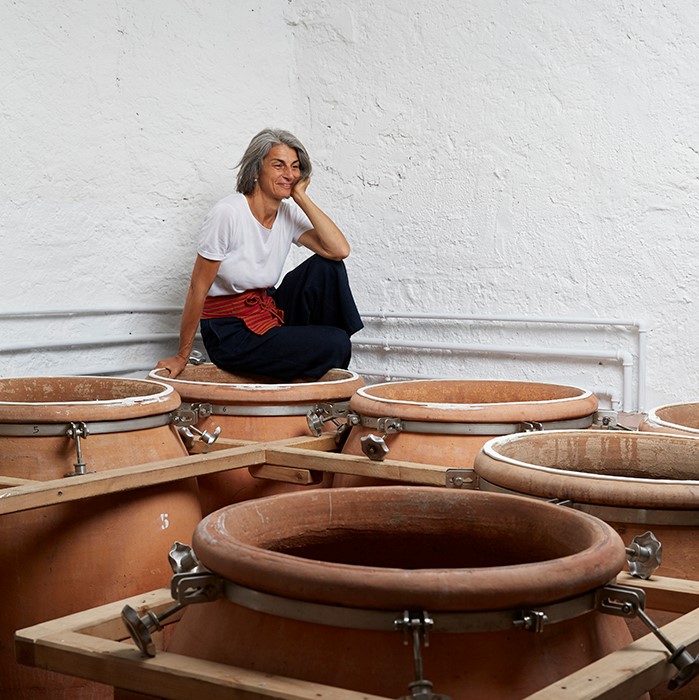
Elisabetta Foradori's journey in her “wine life” is a familiar tale, but one that we never tire of hearing. The early death of her father unexpectedly hurtled her to the management of the family estate. Though “born among the vines” as she says, she took the helm at first more from a sense of duty than one of passion or vocation. Eventually, however, that passion and vocation came through the work itself, both in the vines and in the cellar.
Despite her star rising as "the queen of Teroldego" through the 90's, by 2000 Elisabetta had lost all personal connection to her work. A path of questioning, experiment and intuition (that included everything from biodynamics, massale selection and the use of amphorae) eventually led her to give up any sense of chasing market trends of the “wine industry” to develop the estate towards the goal of making wines respectful of the soil and the local grapes she wants to honor, and using the techniques she found more interesting, less invasive, and more wine “holistic”.
Even with a proven track record, starting from scratch does not always guarantee success. Decisions like progressively replanting the majority of the land from pergola to guyot, radically changing vinifications, producing single vineyard expressions of Teroldego (in amphora no less!); there was no way to know if this would resonate with established or new customers. Still, Elisabetta stayed true to her instincts and as we now know, kept her proverbial throne.
Elisabetta is still very much a daily presence and "the face" for most of the winery's fans. But if you've been following the estate over the last decade it's likely you've met and interacted with her three children Emilio, Theo and Myrtha. All three are lovely and very much evolving the winery into its next phase of existence.
Emilio, the eldest, has been around the longest and unbeknownst to most, he's headed the viticulture for quite some time and, after many years in the cellar with his mother, been making all the wines on his own since 2013. Theo travels the most to represent the winery. He also communicates with people like us (importers, distributors) and is and integral part of the winemaking since 2016, serving as a confidant and advisor to Emilio.
Stylistic shifts, already in motion when Elisabetta was still in the cellar, have become clearly defined over the last decade. This is particularly noticeable with the softening of the Foradori Rosso and Granato through infusion style macerations, partial or full whole-cluster vinifications and avoiding new oak. There have been further experiments with amphora as well, including the very limited Cilindrica bottlings aged an extra year in a smaller, longer amphoras. Finally, it's hard to imagine a wine like Lezèr, a light red born of damaged Foradori Rosso fruit following devastating hailstorms in 2017, would have come into existence without the sensibilities of a younger generation.
And let's not forget Myrtha, who after a long stretch working in farms in Oregon and Quebec has returned to Mezzolombardo and is already beginning Foradori's transformation from winery to full blown polycultural farm. This shift to diversify is very important to the entire family. A full vegetable garden has been planted and the pergolas are now full of salads and radishes. The last time we visited, we didn't see vines but rather spent a late afternoon driving up windy roads to arrive at a gorgeous, lush mountain top destined for cow grazing. In 2020 we got to taste Foradori's first cheeses, an early effort from five cows. Theo laments Italy's lack of affinage and hopes they can incorporate this into their production. (Importer)
Elisabetta Foradori & Marco Tait of Ampeleia | Maremma, Tuscany, Italy | @ampeleia
Ampeleia was born in 2002 from the collaboration of Elisabetta Foradori and a two friends. They saw the huge potential of this particular area of the Maremma, the Colline Metallifere, mineral-rich hills that have been mined since Etruscan times. Not the coastal lowlands one usually associates with the Maremma, the Colline Metallifere are located more inland, at altitude. For example, Ampeleia's vineyards just outside the hamlet of Roccatederighi reach 600m. This part of the Maremma has never been home to intensive agriculture, and it has some of the lowest population density in all of Italy. In fact, the Colline Metallifere are a national park and also a UNESCO Global Geopark site.
Marco Tait has been at the helm of Ampeleia since the very beginning. He's originally from Trentino, where his father was the agronomist at Foradori. As a kid, he remembers doing after-school vineyard tasks and playing hide-and-seek in the cellar. After enology school and working for some larger, more conventional wine operations in the North, he came to Ampeleia, initially skeptical about the power of biodynamics. But Ampeleia is a special place, and its unspoiled nature and inherent biodiversity allowed biodynamics to take root much more quickly than in places that are more anthropized. All activities at Ampeleia had been converted to biodynamics as of the 2009 vintage.
It's hard to put into words just how attuned to Ampeleia Marco is. He's a young guy, but he already has twenty vintages under his belt at Ampeleia. He knows its every corner and, seemingly, its every whisper. He is simply trying to give the land a little "information and intention" through biodynamics. This is no small thing, as Ampeleia's vineyards are diverse and spread out--120 hectares of land, but only 35 planted to vines. The rest is woods, olives, the vegetable garden, and pasture for Ampeleia's animals. There is a wide variety of altitudes, exposures, soil types (both mother rock and soil consistency). As such, Marco has identified 54 unique vineyard parcels, all vinified separately. The harvest is also quite drawn out, starting at the end of August for the initial picks for the rosato and the bianco, and going to the first part of October for the Cabernet Franc. Accompanying Marco on this journey is the excellent team he has assembled: the "People of Ampeleia" ... Lucia, Valentina, two Simonas, Francesco. Yes, domestic sales, logistics, office manager, hospitality manager, export sales, but also always working together in the vineyards and cellars, meeting with Marco, tasting, discussing, planning, making decisions as a cohesive unit.
Over the years, the People of Ampeleia have listened to the land and understood its strong suits: Cabernet Franc and Alicante Nero, a distinctly Tuscan biotype of Grenache. They've singled out vineyards whose wines continually expressed something so unique that it made more sense to highlight them rather than blend them. Thus began the "monovarietale" single-vineyard series, with Alicante Nero, Carignano, and Cabernet Franc. Soon, two more micro Cabernet Franc parcels will be released, making Ampeleia the first estate in Italy to boast four labels of what is becoming their signature grape variety.
Like the best wineries of the world, things at Ampeleia are in constant but gentle movement.
Barbara Lebled of TchinCheers | Châtillon-sur-Cher, Loire Valley, France | @tchincheers
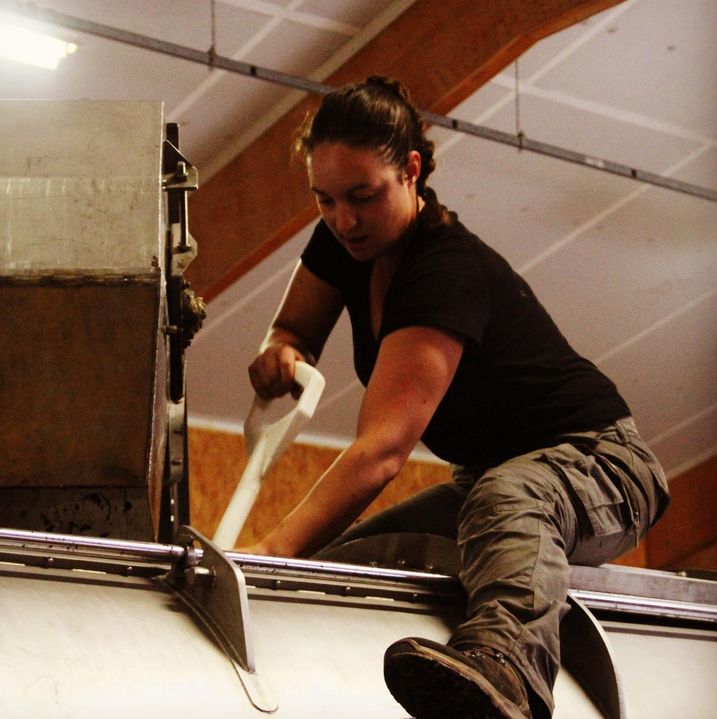
"We were introduced to Barbara Lebled by her father Laurent, who we've been working with since the 2013 vintage. In 2019, Laurent was able to purchase 10 hectares of vines and a cellar from a retiring vigneron in the same proximity to the Saint-Aignan vines he'd been working historically. Compared to the logistically complicated past of living in Saumur, working vines principally in Saint-Aignan and running a cellar over an hour away in Savigny-en-Veron (Chinon), Laurent and his wife Sonya now live in Châtillon-sur-Cher, a 12 minute drive to the vineyards, making life a lot easier.
But it also meant a huge jump in land ownership, one Laurent could not handle alone. It just so happened that his oldest daughter Barbara had caught the wine bug and was finishing her professional studies. So Laurent proposed that if Laura were willing to work the entirety of the estate with him, she could use 2.5 hectares of vines to launch her own project.
She accepted and 2019 marks her first vintage. (Louis/Dressner-Importer)
Jessica Munnell of Wautoma Springs | Yakima Valley, Washington | @wautomawines
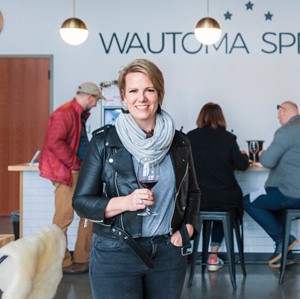
In the wilds of the Pacific Northwest you will find the vineyards of Wautoma Springs, in Washington State. Winemaker Jessica Munnell has made wine all around the world and for some of Washington’s biggest producers, and now focuses her attention on the boutique winery of the same name. Her wines have won numerous awards internationally, nationally, and regionally in Washington State.
Olympia Samara of Roterfaden | Württemberg, Rosswag, Germany | @weingut_roterfaden
In a tiny southern village in Germany, nestled within the forests, lies a breathtaking amphitheater of terraced banks, where slopes of shell limestone are steep, sun-drenched, airy, open, and ideally suited for Riesling. It is here, in Rosswag, Württemberg, just 20 miles north of Stuttgart where winemaker Olympia Hoffman and husband "Hannes" Hoffman of Weingut Roterfaden call home. Samara, originally from Greece, and Hoffman, from Rosswag, met at enology school at Geisenheim and never looked back. Roterfaden means “red thread” which represents how their different backgrounds and experiences come together, and is the name of their winery. What makes Samara so happy about winemaking and farming is, “the freedom of working with nature. You experience all the seasons. Somehow, you know that nature will be the one to decide everything. You don't have the upper hand, so you just let go… It gives you freedom knowing that there's something much bigger there, that gives the thread to everything else and you are part of it.”
Julia Sherman and Martha Stoumen of Jus Jus Verjus | Los Angeles and Sebastopol, California | @saladforpresident @marthastoumen
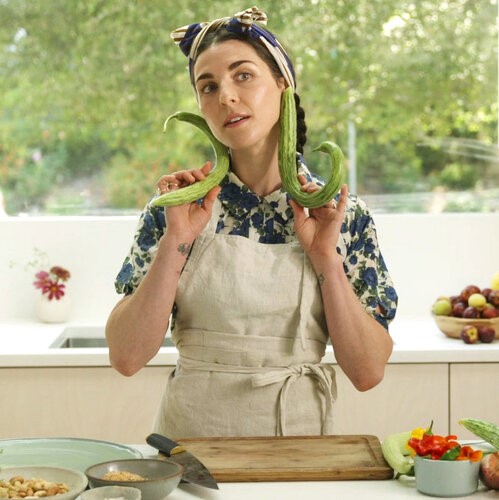
Julia Sherman is a Los Angeles based artist, writer, cook and photographer who runs Salad for President, an evolving publishing project that draws a meaningful connection between food, art and everyday obsessions. Each of Sherman’s blog entries contains a salad recipe made in collaboration with an artist, musician, writer, or creative professional, living their lives artfully.
This online platform serves as a springboard for events, collaborations and public programming. In the summer of 2014, Salad For President created the first ever MoMA PS1 Salad Garden, re-imagining the previously unused rooftop of the museum as a public space for heirloom vegetables, performances and dinners. The second Salad Garden was installed at the Los Angeles Getty Museum in 2015. Sherman has been the Creative Director at Chopt Creative Salad Company since 2015. Sherman, and her writing, have been featured in Vogue, The New York Times, T Mag, Domino, Art in America, Modern Painter’s, Triple Canopy, Cherry Bombe, The Paris Review, Martha Stewart, Food & Wine, and Bon Appétit, amongst others.
Sherman’s Salad for President: A Cookbook Inspired by Artists was published by Abrams Books in the Spring of 2017, and is available for sale. Her second cookbook will be published Fall 2021, and is a treatise on the messy art of entertaining.
Sherman is also the founder and creator of Jus Jus Verjus, a low ABV sparkling wine made in collaboration with natural winemaker Martha Stoumen.
Martha Stoumen Wines recaptures the farming and winemaking culture of patience and respect
for the terroir. For Martha, wine sets the pace and rhythm of the winemaker’s life, rather than the other way around. Her wine is a cult favorite amongst the natural wine enthusiasts. After her initial exposure to grape farming and winemaking in Tuscany, Martha began a series of apprenticeships, sandwiched around a Master's at UC Davis. Martha and her wine have been featured in Bon Appetit, Sunset Magazine, Goop, Vogue, Food & Wine, Milky Mag, Punch, Esquire, and the San Francisco Chronicle, amongst others.

Harvest Club $180/month
We offer four monthly wine club subscriptions covering a range of interests and budgets. Our offerings include high quality, hand-selected wines at each level, including the option to customize. Perks include huge savings with each selection and 10% off anytime you shop. Not a members? Join today.