
Summer Down Under and Beyond! (Harvest Club July 2022)

Harvest Club Wines:
July in the Vineyard means Veraison!
All the little green berries slowly begin to change colors depending on grape variety. Some from green to yellow, to pink, to purple, to even black!!
Featured Wines:
"Grenache dominant with Cinsault playing a lesser role, this is a sweeter fruit version with juicy dark cherries and blood plums driving the up front with hopefully the now familiar smooth transition to a more savoury finish." (Winery)
Try it with: Soft cheeses like Brie, Pork tenderloin, or Carne Asada Tacos!
"...more red fruited and rhubarby, nice herbal from the whole bunch and fitting the brief of juicy, smashable, complex and interesting."
Try it with: Steak tartar, Carnitas, or Atlantic Salmon!
Hints of fennel and citrus peel, fresh, saline, round body, delicate tannins.
Try it with: Spanish Manchego, whole grilled fish, pork ribs, grilled veggies!
90 points Robert Parker's Wine Advocate: "Notes of pear, green apple, citrus zest and fresh bread preface the 2019 Mâcon-Verzé, a medium to full-bodied, bright and precise wine that derives from 50-year-old vines planted at mid-slope. Concluding with a gently honeyed finish, it's a terrific value."
Try it with: Brie Cheese, and other rich cheeses, Chilean Seabass, Lobster Tails, or King Crab!
"Citrus, fennel, caramelized onion…am I writing a recipe for what to pair with this? No, the wine actually has all these aromatics. But yes! That's certainly the base I'd use for any seafood dish to serve alongside this, with some tomato and maybe chorizo for added depth of flavor. Paris equally well with creamier dishes and a host of cheeses." (Importer)
Try it with: Moules Marinières, wild Striped Bass, or a fennel and seafood linguini!
89 points Wine Advocates: "...aromas of red berries, spices, peonies and sweet soil tones. Medium-bodied, lively and supple, with melting tannins and a natural profile that lives up to its name, it concludes with a sapid finish."
Try it with: The possibilities are endless!! From nearly all cheeses, to seafood, chicken, pork, lean steak!!
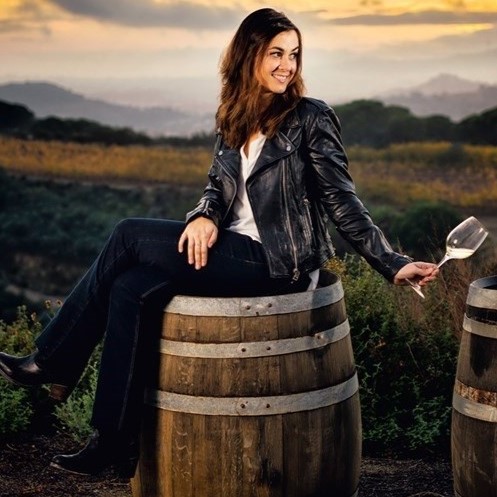
About the Producers:
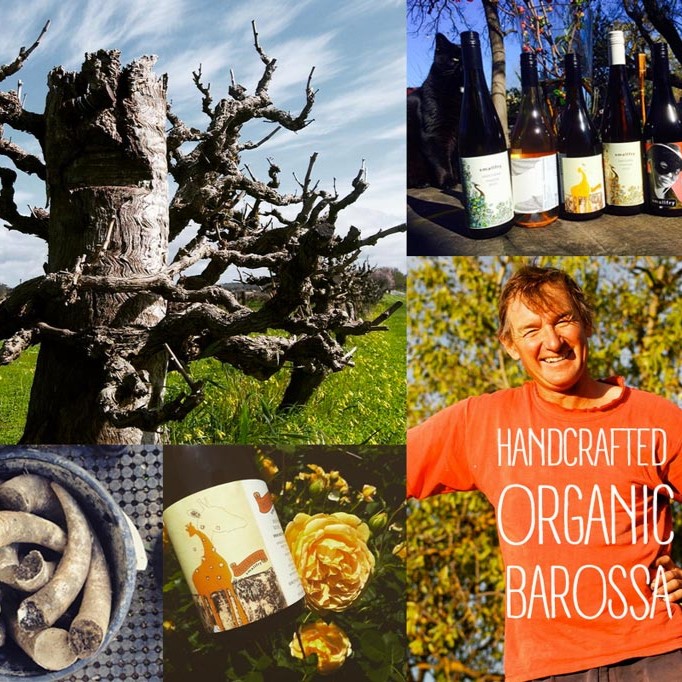
Suzi Hilder and Wayne Ahrens | Barossa, Australis | @smallfrywines
As the name suggests, this winery is but a drop in the ocean of Australian wine. But oh what a drop. Smallfry is a partnership in business and life between Suzi Hilder and Wayne Ahrens, viticulturists bitten by the winemaking bug. That they are also foodies drives their winemaking down a certain path: native yeast ferments, zero to minimal adjustment, old oak, and a soft hand in the cellar allowing the vineyard to speak. Their style is food friendly, European-influenced (Wayne spent part of his youth in Spain), with an eye to balance and subtlety.
Wayne and Suzi own two very special vineyards, one in Eden Valley and the other in Barossa’s Vine Vale subregion in the valley floor. The Eden Valley vineyard has been established since 1994 while the Vine Vale block has been the Schlieb’s family seat for generations, with the last incumbent putting in 52 vintages before hanging up his snips. In other words…the vines are old, some dating back to the 1850s!
Mireia Pujol-Busquets | Catalunya, Spain | @altaalella
Celler de les Aus is part of the winery Alta Alella. Starting in 1992, the family winery farmed organically (certified) from inception and is now led by Josep's daughter Mireia Pujol-Busquets. Alta Alella's winemaking practices incorporates understanding and adapting in a sustainable way to the present and future impacts of climate change. For example, the family has a natural seed study and selection practice which discovers the most resistant seeds to mildew and drought.
In the early 2000’s, Josep partnered with a friend to craft a Cava made with no addition of external yeasts, no external sugar, no addition of SO2. A Natural Cava. This was accomplished by using the must of Pansa Blanca (Xarel-lo) for the second fermentation. At first the wine was called NU. Many years later, the name changed to Bruant which is the name of a local bird. All of Celler de les Aus's wines are named after the birds that live in the Serralada de Marina’s Natural Park.
The process of making wine without addition of SO2 was new for Josep. He began with Pansa Blanca and named the wine Tallarol. Years later, Celler des les Aus & Alta Alella separated to demonstrate that the wines were made in different locations and did not influence each other.
Today, Josep and Mireia produce a few cavas: Capsigrany made with a rare varietal Pansa Rosada. There are only 5ha left of Pansa Rosada in the world. Merla made with the grape Mataro and a pétillant naturel called “Aus”.
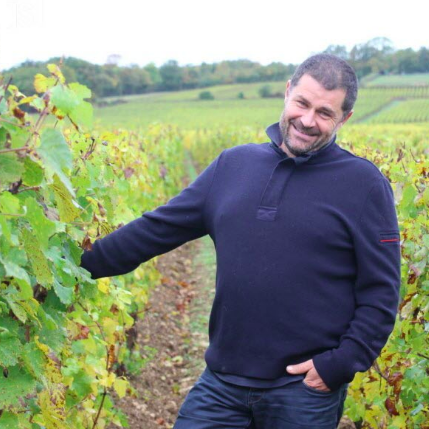
Nicolas Maillet | Verzé, Maconnais, Burgundy, France
From time to time, we have the good fortune of discovering under-the-radar growers who might be thought of as “up and coming” in the US market, but who are actually stars and leaders in their regions, with a devoted clientele in Paris and beyond. This is indeed the case with Nicolas Maillet who hangs his hat in the small Maconnais village of Verzé. Nicolas is bear of a man, with a broad chest and strong hands, exuberant and intensely focused. He is uncompromising in his vineyard work, and often among the first to lend a hand and words of encouragement and counsel to young vignerons in the region who are interested in farming naturally. Maillet has farmed organically since 2010 (certified by Ecocert) and he began implementing biodynamic practices in 2013. Particular attention is paid to the upkeep of the soil to ensure a vibrant and healthy micro-biome. When walking through the vineyards your eyes take in the greenest of green hues as you step over large chunks of chalk strewn about the vine rows.
The village of Verzé is located to the northwest of the city of Macon, a little north of La Roche-Vineuse. It is perhaps one of lesser known villages in the Maconnais, though Domaine Leflaive produces wine from there as well, and now own 30 hectares. The century-old domaine consists of eight hectares of vines: six hectares of Chardonnay and two hectares split evenly between Aligoté, Pinot Noir and Gamay. Old vines are plentiful, the youngest of which are 50 years of age. The Verzé vineyards lie on chalky, limestone-centric, and generally eastern-facing slopes. This exposition combined with the mineral soils and surrounding microclimate produce some of the most mineral-driven, high-acid wines of the region (whereas the sun-drenched western slopes tend to produce rounder, richer wines). The land has been in the Maillet family for four generations, and in the early years wines were produced and bottled in the family cellars. However, from 1928 to 1998 fruit was sold to the local coop. When Nicolas took the reins in 1999, he had ambitious goals for the vineyards and believed that the work should be felt in the bottle. He proudly returned to the family’s early tradition of estate-bottled wines.
In addition to his tireless work in the vines, Nicolas is adamant that slow, cool fermentations are the key to making energetic, long-lived wines. The indigenous yeast fermentations last from 6-18 months depending on the wine and individual terroirs. The wines are raised in tank in order to also preserve the sanctity and purity of the underlying soils. As a rule, no racking is done unless he senses reduction issues. Additionally, Nicolas abhors the idea of masking his terroirs so very little sulfur is used in vinification and at the bottling, resulting in total SO2 readings of 40-50 mg.
These wines are a step above the fruity and pleasant wines we have come to enjoy from the Maconnais. Nicolas Maillet endeavors to make wines that translate the stony terroirs of his beloved village of Verzé, but most importantly, he aims for utter deliciousness. Mission accomplished! (Importer)
Olivier Pithon | Calce, Cotes Catalanes, Roussillon, France | @pithon.olivier
Originally from Anjou, in the Loire Valley, Olivier Pithon grew up in a family of winegrowers. From a tender age, Olivier was initiated into wine by his maternal grandfather. Olivier was only four years of age when his brother, Jo Pithon, the respected winemaker in the Côteaux du Layon area of Anjou, set up his domaine. Working in the vineyards and in the cellar is naturally how Olivier spent most of his teenage years.
At 18, he left the Loire for Bordeaux, where he studied viticulture and where his eyes were opened to the world of wine, which was so different from that in his native homeland. After a couple of work experience positions in Jurançon and Beaujolais and armed with his diploma, Olivier Pithon gained more savoir-faire, particularly with the renowned self-taught winemaker, Stéphane Derenoncourt. He taught him precision and the love of a job well done, along with the fact that wine should be made in a sensitive manner bringing balance, lightness, and above all, pleasure. Fundamentally, Derenoncourt instilled in Pithon the need to make wine with love.
Then came the desire for Olivier to produce his own wines. So, in 2000 he embarked on a search for a place where he could live his passion for wine and terroir.
Attracted by the Roussillon region, he travelled to the small village of Calce in the Vallée de l’Agly, where he met with the highly reputed winemaker, Gérard Gauby. Seduced by the land, Pithon never left that village, where his improbable dream came through. By the 3rd of January 2001, he was already pruning in his own vineyard planted with 40-yearold Carignan vines. Never had he thought that one day he would own a 8.5-hectare vineyard with a breathtaking view over to the Mediterranean sea, the Pyrenees and Corbières.
From the start, Olivier worked with his heart, soul, and guts, farming organically with the utmost respect for the land. Today, the estate totals 22 hectares in plots scattered at 300 meters above sea level on schistous soils, and planted primarily with Carignan, Grenache Noir, Grenache Gris, and Macabeau. Due to the favourable climatic conditions - plenty of sun, wind and cool nights - rigorous biodynamic farming started cautiously, and by 2014 the entire estate was certified.
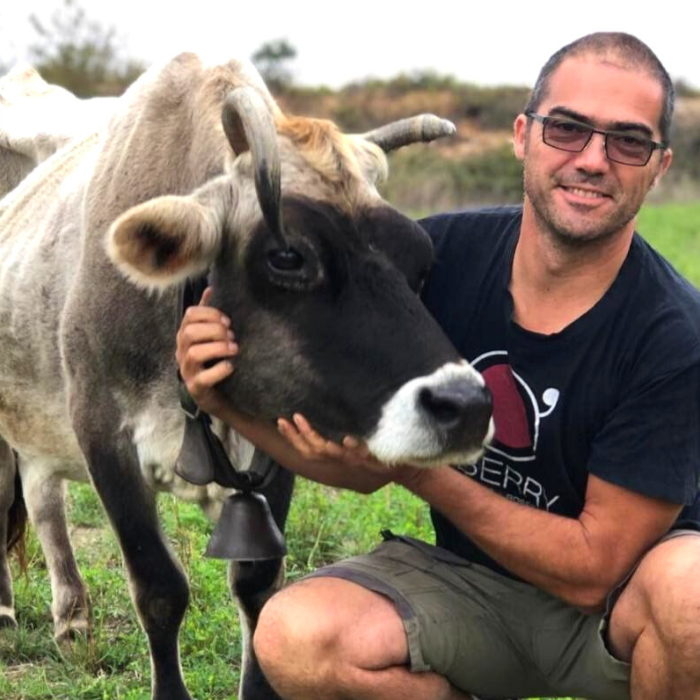
A generous, upstanding, and respectful man, Pithon loves animals and in particular cows. In fact, he arrived in Calce with his cow by the name of Laïs, something that the locals found quite peculiar. Today, Domaine Olivier Pithon is a place where biodiversity is thriving. The introduction of cereals into the vineyards has brought life back into the soils. Sheep and cows graze in the vineyards from october to april and Olivier also produces honey from his cherished bees. In order to protect the estate’s eco-system, hundreds of trees and hedges have been planted.
Typically, harvests kick off quite early, towards the mid- to end- August, and due to more and more common droughts, yields can be very low.
In the cellar which he completed in 2015, Olivier is very confident, yet he adopts a gentle approach and his rule is to produce wine as naturally as possible.
Both farmer and winegrower, Olivier Pithon has his own very philosophical approach to viticulture and winemaking, and his wines reflect his very own personal style. His domaine is one of the finest in the south of France and the authentic wines that he crafts can only be described as ‘grands vins du sud’. They are remarkable, slender, and brilliantly made. (Terroirs.ie)
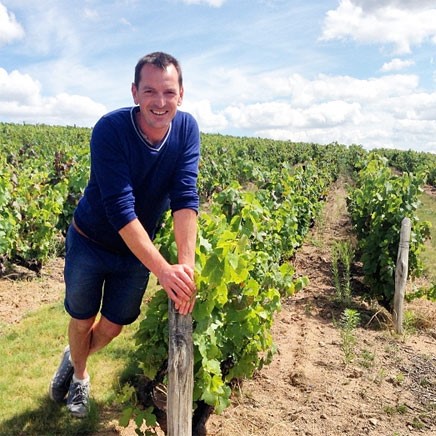
Julien Sunier | Avenas, Beaujolias, France | @julien_sunier
Dijon born surfer turned Cru Beaujolais, natural wine champion, Julien has extensive experience working for notable organic and biodynamic estates in Burgundy (Christophe Roumier), New Zealand, California, and 2018 marks his 10th year farming his own organic vineyards. Vintage in and vintage out his wines are deft, clean, and clearly express site with a captivating transparency. The domaine of Julien Sunier debuted in 2008 with 3 hectares of old vines in some of the top sites in Morgon and Fleurie, which he immediately converted to organic farming. He has also started incorporating biodynamic principles. Today the estate has close to 6.5 hectares of predominantly old vines in sought after single parcels in all 3 of his Crus, including Py in Morgon.
The winery is located in Avenas, which is well over 500 meters and the high elevation coupled with the fact that Julien does not temp control fermentation translates to long & slow ferments, a delicacy of flavor and extraction, and a elegance vintage in & vintage out. Hand harvests, basket press, native yeast ferments, ageing in neutral wood and tank, minimal to no sulfur.
Julien is a Dijon native but had no family connection to vineyards or the wine industry. His mother is a hair stylist and one of her clients happened to be Christophe Roumier, who offered to show Julien "what this wine stuff was all about". From there Julien worked harvests across the globe in New Zealand and California (Bonny Doon) with surfing sessions in between and returned to Burgundy to intern with Nicolas Potel in Nuits Saint-Georges and Jean-Claude Rateau in Beaune, where he solidified a passion for organic and biodynamic viticulture.
Julien had developed a deep knowledge of the Beaujolais Crus and close contacts while working as assistant winemaker for 5 years with a big house négociant. Throughout that time he got to know the best parcels in all 10 Beaujolais Crus and develop relationships with vignerons who were willing to long-term lease their vineyards in prime sites to Julien for his own project. In 2008 Julien struck out on his own and realized his dream of having his own label according to his organic and biodynamic principles. He started with 3 hectares of old vines in some of the top sites in Morgon and Fleurie. He added Régnié in 2009 and today he has 6.5 hectares between the 3 Crus and is launching a new mini-négociant project designed to help train young, inexperienced but passionate growers and winemakers how to work naturally in Beaujolais.
Harvest Club $180/month
We offer four monthly wine club subscriptions covering a range of interests and budgets. Our offerings include high quality, hand-selected wines at each level, including the option to customize. Perks include huge savings with each selection and 10% off anytime you shop. Not a members? Join today.