
Opening The Blinds Behind the Iron Curtain! Wines of Eastern Europe - Harvest Club (May 2022)

Harvest Club Wines:
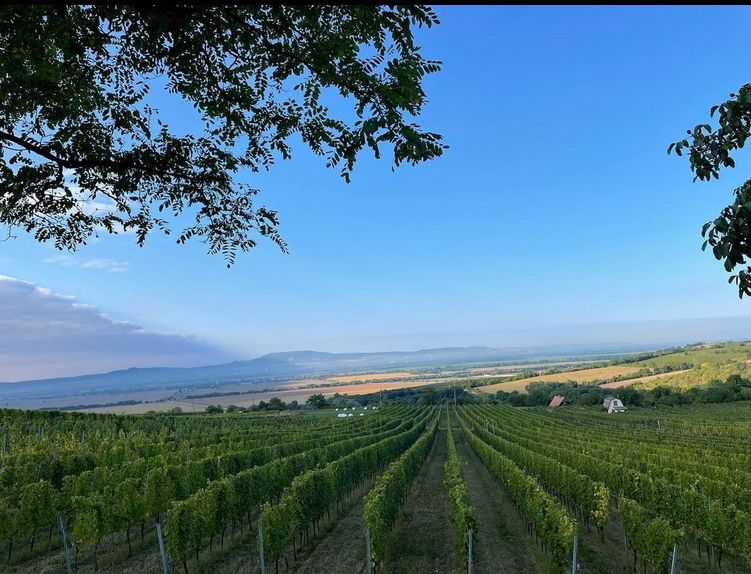
May In The Vineyard:
Most grapevines self-pollinate, after which fruit set occurs. This is when you’ll see small, green clusters of grapes on the vines. Fruit set usually begins in May, and if the weather doesn’t cooperate, vineyard managers still have to worry about frost. Not all the vines will pollinate, so fruit set is an important indicator of crop yield. If many of the vines aren’t showing fruit clusters, yields will be low.
Around this time, vineyard crews will work on canopy management, or leafing, to control the amount of sunlight and air that the fruit clusters receive. Grapes need sunlight to ripen, but too much sun can give the fruit a sunburn. According to Napa Valley Vintners, vineyard workers may tend to each row of vines 20 times in a single growing season.
In addition to canopy management, the vineyard workers will inspect the fruit clusters and cut away any clusters that aren’t developing properly. It can be tough for growers to see so much fruit dropped, but this crop thinning helps the vines send their energy only to the best clusters and results in high-quality fruit. The Napa Valley Vintners point out that while Napa vineyards produce only about half the fruit per acre compared with other grape-growing regions, the price per ton for Napa grapes is about five times higher than for other California grapes. (Wine Cooler Direct)
This month we travel behind the old "Iron Curtain" and experience the absolutely magical wines of Eastern Europe. A wine region many of us were unaware of! There is such incredible viticulture and winemaking happening here. Get these wines now, while they're still affordable!
Featured Wines:
Piquentum | 2019 Refosk | Buzet, Istria, Croatia | Organic Farming Practices, Minimal Intervention
This wine has the remarkable ability to seem incredibly pungent on the nose, coat the inside of the glass like cough syrup, and yet deliver a light bodied, low alcohol wine with acidity built for the Istrski pršut (Istrian Prosciutto) that happens to hang from the ceiling of the winery.
Historically, Refošk was given to woman after childbirth to combat anemia due to the rich iron content. A great pairing with charcuterie, oily cured fish, fish stews, and blood sausage. Locals make “Istarska supa,” a slightly warmed broth of wine, toasted country bread, olive oil, sugar, and a healthy dose of black pepper. (Importer)
Try it with: Salumi and cheeses, truffle risotto, boeuf-bourguignon, or get adventurous and try it with the above Croatian delights!
"Every other Juhfark in our portfolio is from the Basalt crumble soils of Somló and the similarly volcanic northern shore of Lake Balaton in Hungary. They’ve either had lengthy élevage with botrytis, or were pure free run made fresh. This is a whole other side of Juhfark. The 2020 spent one week in the hamburger method (open vat fermented in three layers: foot trodden, whole clusters, and destemmed), and then aged 10 months on the lees in 500L Hungarian oak. With little to no botrytis, this is more on the tea spectrum than fruit, zero oxidative notes, and more creamy in lieu of tannic grip. While not a skin contact wine in the general sense, if served chilled, let this one come up to cellar temperature." (Importer)
So many unique complexities found in this wine. Pear, apple, citrus, floral, beautiful texture and very refreshing. This is definitely a deep conversation in the glass
Try it with: Mediterranean food, Black Cod fish tacos, or white sauce pastas!
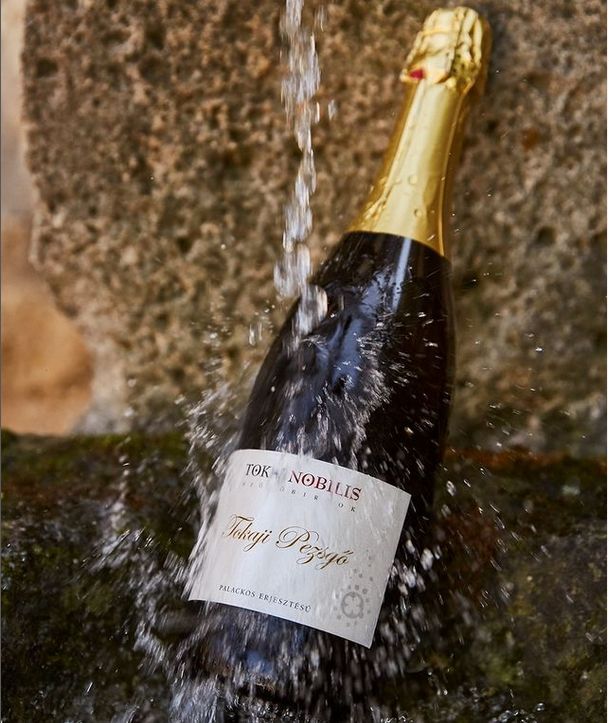
Sparkling wines are a growing category across the board in Tokaj. You’re never reaching for acidity here, and many sites are adjusting to climate change where botrytis is less and less consistent. There is also of course a faster turn around in the cellar compared to the naturally sweet wines. Sarolta has been tinkering with traditional method wines since 2009, and was among the very first to do everything in house herself. She opted out of taking the aromatic route with grapes like Hárslevelű or Sárgamuskotály, and has instead focused on Furmint. (Importer)
"Pale and bright with fine bubbles. A delicate bouquet of apple crumble with lemon zest and quince. The palate is elegant and long, with notes of quince, apple blossom, a hint of biscuity autolysis and a graceful yet crisp finish." (Winery)
Try it with: Salmon sashimi, East Coast oysters, Cioppino, or grilled veggies!
Štoka | 2020 Teran Peneče Red Pet-Nat | Kras, Slovenia | Organic Farming, Minimal Intervention
Historically, Teran from Kras has been prized for its medicinal properties. It is one of Slovenia's only wines of protected origin. The high content of aluminum and iron oxide in the Karst soil gives the soil the characteristic red color and the wines their pungent ferrous quality. Made as a Peneče (pétillant-naturel), the bloody iron flavors are still there, but greatly lifted by fresh sour cherries and far more tart fruit than a typical macerated and open vat fermentation. If you’re into dry red Lambrusco and are clinically anemic, then you’ve found your medicine. (Importer)
Try it with: BBQ!!!!! Grilled veggies, burgers, lamb, venison, ribs. You name it!!
VáliBor | 2020 Szürkebarát (Pinot Gris) | Badacsony, Hungary | Organic Farming, Minimal Intervention
Szürkebarát is no stranger to Lake Balaton and has been well documented here since the 13th
century. Organically grown in the volcanic soils just 1/3 of a mile from the shore, it’s super creamy without being overly leesy, refreshingly acidic, and with just a little grip from the 2 days of maceration in both barrel and tank. The flavors are ripe along with the salted rim typical of Péter’s wines. No other wine in the portfolio blurs the line between rosé and skin contact more than this one. (Importer)
Try it with: Ethiopian food, Fried Chicken, Roasted root veggies!
After macerating for thirty days in an open topped oak vat without any additives, the Cabernet Franc was barreled down into Slovenian oak barrels where the wine slowly finished malolactic fermentation. Apart from topping barrels, nothing else was done until bottling. Phenomenal acid, a fine-grained texture, and a balance of fruity and savory flavors make this is varietally spot on Cabernet Franc with an elegant Slovenian twist. Traditionally paired with white polenta and foal, gamey meats, sweet herbs and hearty earthy flavors.
Try it with: Goat or blue cheeses, roasted duck, beef burgers, or grilled lamb!
About the Producers:
Dimitri Brečević of Piquentum | Istria, Croatia | @picquentumwife
Originally built in 1928, converted into war shelter in the early 90s, and now a winery, it’s the classic tale of a son of a Frenchwoman and an Istrian father growing native Croatian grapes in an old Mussolini era concrete water tank. Born in Jurançon in the foothills of the Pyrenees, Dimitri Brečević studied oenology in France and then worked at Domaine de Chevalier in addition to working harvests in Australia, New Zealand, Bordeaux, and Burgundy. In 2004 he decided to invest himself in his father’s homeland of Istria near the town of Buzet. The name “Piquentum” is the ancient Roman word for the beautiful hilltop town of Buzet. Dimitri’s arrival falls right in line with the regions long history of Romans, Goths, Franks, and Bavarians. The Republic of Venice even had a solid 500+ year run. And although briefly a part of the Austro-Hungarian Empire until the World Wars, it was briefly once again a Province of Italy until 1947 when Yugoslavia was created and Italy ceded the territory. Istria is also the largest peninsula in the Adriatic, Croatia’s westernmost region, and borders both Italy and Slovenia. With only about 1750 square miles, over 280 miles are coastline with 35% covered with oak and pine forests. Indigenous grapes like Malvazija Istarska and Teran coupled with the mineral rich white and red Karst soils all seem to echo the salinity of this pristine coastline and the pungency of its truffle-ridden interior.
József Bodó of Bott-Frigyes | Južnoslovenská, Slovakia | @bottfrigyes
After WWI, Hungary lost around 71% of its territory to Romania, Ukraine, Czechoslovakia (Slovakia), Yugoslavia (Slovenia, Croatia, Serbia) and Austria. Over 3 million ethnic Hungarians found themselves outside of Hungary with significant outcome on the grapes and traditions that never stopped or are now coming back to life beyond the present day borders of Hungary. On the southern slopes of the Mužsla Hills in Slovakia surrounded by the river Garam, Danube and the Ipoly rivers, is one such example: Bott Frigyes. Even the neighboring village of Béla is where Judit and József Bodó of Bott Pince began their winemaking career (ethnically Hungarian but born in Slovakia) before moving to Tokaj. Long story short, a whole bunch of things all came together with Bott Frigyes coupled with great farming, honest winemaking, and delicious wines.
Sarolta Bárdos of Tokaj Nobilis | Tokaj, Hungary | @tokajnobilis
Born and raised in Tokaj, Sarolta possess a strong maternal sensibility and keen awareness of the changes and challenges facing Tokaj - one of the best known yet most forgotten wine regions in the world. Beginning her career studying at the University of Horticulture in Budapest, she also took advantage of the recently fallen Iron Curtain and spent time in France, Italy and Spain. Upon returning to Hungary, she worked at Gróf Degenfeld and soon after became the inaugural winemaker at Béres Winery in nearby Erdőbénye overseeing 45 ha of vineyards. Preferring closer attention to detail and the total knowledge inherent in small-scale winemaking, she left and planted her own 6 ha in 1999. In 2005 she converted a traditional 19th century house into a winery and cellar in the middle of the town of Bodrogkeresztúr. In addition to dry and off dry bottlings of Furmint, Hárslevelű, Kövérszőlő, and Sarga Muskotály, she is also making incredible late harvest and Tokaji Aszú 5 and 6 Puttonyos. All her wines embrace a myriad of volcanic soils with remarkable aromatics and balanced acidity.
The Štoka Family | Kras, Slovenia | @vina_stoka
Wind, caverns and the Adriatic Sea define the Slovenian/Italian border region of the Kras. For over 200 years the the Štoka family has nurtured the native red Teran and white Vitovska in the iron rich “terra rossa” that the Kras is famous for. Their farm is located north-east of Trieste about 5 miles from the Adriatic in the village of Krajna Vas. The Kras, or “Carso” as it is called in nearby Italy, is Europe’s first recognized cross border wine region where only 600 hectares of vines are planted between the two countries. The tiny amount of fertile soil is the result of various human and natural events. Historically oak forests dominated the land until the Venetians deforested nearly everything to build ships and city of Venice. The resulting erosion and the famously strong winds called the “burja” caused huge amounts of topsoil to simply blow away. People learned how to build stonewalls called “griže” to protect against the wind and small manmade lakes to gather rain called “kali” to keep crops alive. Farmers, including the Štoka family, even learned to transport soil to naturally protected locations. Coupled with the regions already soluble Bedrock (mostly limestone and dolomite) and lack of surface water, the Kras is riddled with sinkholes, cenotes, and massive mostly unexplored underground caves. It is one of the most severe and unique terroirs in the world.
Péter Váli of VáliBor | Badacsony, Hungary | @valibor_badacsonyors
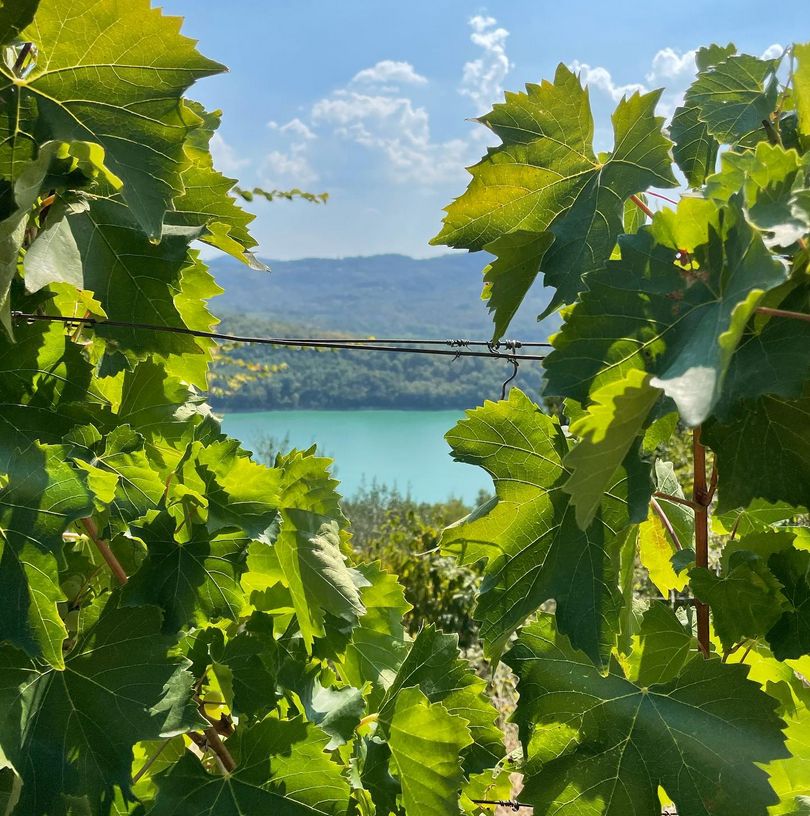
Along the northern shore of Lake Balaton, and nestled in a valley in between the basalt cones of Örsi, Gulácsi, and Tóti we find the wine and food world of Péter Váli. I’m convinced that Péter runs on a small fusion reactor. As we race through the cellar and open countless bottles, he’s also playing with his 4 children, bringing out platters of his wife’s cheese, brother’s deer sausage, his own homemade cured meats, and then cooks from scratch a stand alone amazing meal over an open fire. He doesn’t appear to break a sweat or show any signs of distraction. His wines show an equal measure of focus and joy. He dreamed of being a chef since he was 10. As a teenager in the mid 1980s during Communism, he was able to attend the Gundel Károly Catering School and tasted French and Italian wine and cheese for the first time. He then decided that in addition to being a chef, we would also make his own wine. Founded in 2000, he more than achieved both goals. 4.5 of his 9 hectares surround his home along with herb/vegetable gardens, a typical buried cellar, and endless ovens and fire pits strewn about. Everything is certified organic. Although only an hour away from Somló, the effect of the lake brings wind, protects against frost, and allows for more ripeness. The acids here are intense, but rounded out with aromatics, fruit and salt. You need wines like this in order to survive the over the top hospitality of this man.
The Batič Family | Vipava Valley, Slovenia | @batic_wines
With an immense respect for nature, viewing themselves more as expert gatherers rather than heavy-handed winemakers, and paying special attention to local varieties, the Batič family has been making wines that reflect land and vintage since 1592. Given such history, their approach to wine growing goes beyond organic and biodynamic. Wedged between Italy, Austria, Hungary, and Croatia, the Vipavska Dolina (Vipava Valley) lies within the Primorje wine growing region of Western Slovenia right along the Italian border. The land enjoys both a Mediterranean and Alpine microclimate coupled with marl, clay, flysch and sandstone rich soil. Warm nurturing air flows in from the Adriatic and over the Friuli-Venezia Giulia plains while cool air rushes down from the Alps helping retain acidity and aromatics. Overall the region is characterized by powerful mineral driven reds like Refošk, Bordeaux varieties like Cabernet Franc, Merlot and Cabernet Sauvignon (as is also common in neighboring Fruili), and a host of fascinating white varieties like Pinela, Pinot Gris, Zelen, Klarnica, Vitovska and Rebula.

Harvest Club $180/month
We offer four monthly wine club subscriptions covering a range of interests and budgets. Our offerings include high quality, hand-selected wines at each level, including the option to customize. Perks include huge savings with each selection and 10% off anytime you shop. Not a members? Join today.