
Italy. Land of Food, Culture, and Wine! - Harvest Club (June 2022)

Harvest Club Wines:
June in the Vineyard means Fruit Set!
Temperatures normally begin to rise in June, and the flowers open up to invite pollination. During this stage (which usually lasts about two weeks, until June 24th or thereabouts), good weather is of utmost importance, because torrential rains could ruin the entire harvest!
Featured Wines:
Berlucchi | "61" Franciacorta Brut | Lombardia, Italy | Organic Farming Practices
Brut '61 is a tribute to the birth of Franciacorta in 1961—the year Berlucchi produced the first of this classic method sparkling wine. This fun and lively sparkler offers citrus fruit and a crisp, clean finish.
Try it with: Soft cheeses like Brie, dried fruits, Broccoli with Pecorino and lemon, or with chilled lobster!
Musso | 2017 Freisa | Langhe, Italy | Organic Farming Practices
Deep ruby red color. The nose is very vinous and fruity, with hints of cherry,blackberry and raspberry. Just a hint of frizzante bubbles!
Try it with: Cold cuts, Meat appetizers, boiled snails and “bagna cauda”!
Stefano Amerighi | 2018 Syrah | Cortona, Italy | Biodynamic with Regenerative Practices
Wild dark plum and blackcurrant, intense olive tapenade and white pepper.
Try it with: Charcuterie with salumi and hard cheeses, steak au poirve, grilled lamb chops!
"An intense straw yellow wine with golden reflections, delicate and long tones, round and soft, and structured. Part of the wine goes through the terracotta amphorae method, a traditional process of aging wine in clay, providing extra flavor and persistence to the body. It also has delicate floral scents such as elderflower and ginger." (StoneGate)
Try it with: Pecorino Cheese of course! Also, fried calamari, tempura veggies, or Risotto alla Milanese!
Tabarrini Giampoalo | 2018 "Il Padrone della Vigne" Umbria Rosso | Umbria, Italy | Organic Farming
Fresh, firm, and full-figured, its fruit-driven frame is interlaced with impressions of fleshy black olive and sweet tobacco with impressive tannic structure and acidity.
Try it with: Pork shoulder with garlic & prune, or black truffle pasta!
La Roncaia | 2019 "Eclisse" | Colli Orientali Friuli, Italy | Organic Farming
Freshness and minerality combine with a good smoothness, in a body showing harmony, big depth and persistence.
Try it with: Shrimp taquitos, marinated Cod tacos, or lemon chicken piccata!

About the Producers:
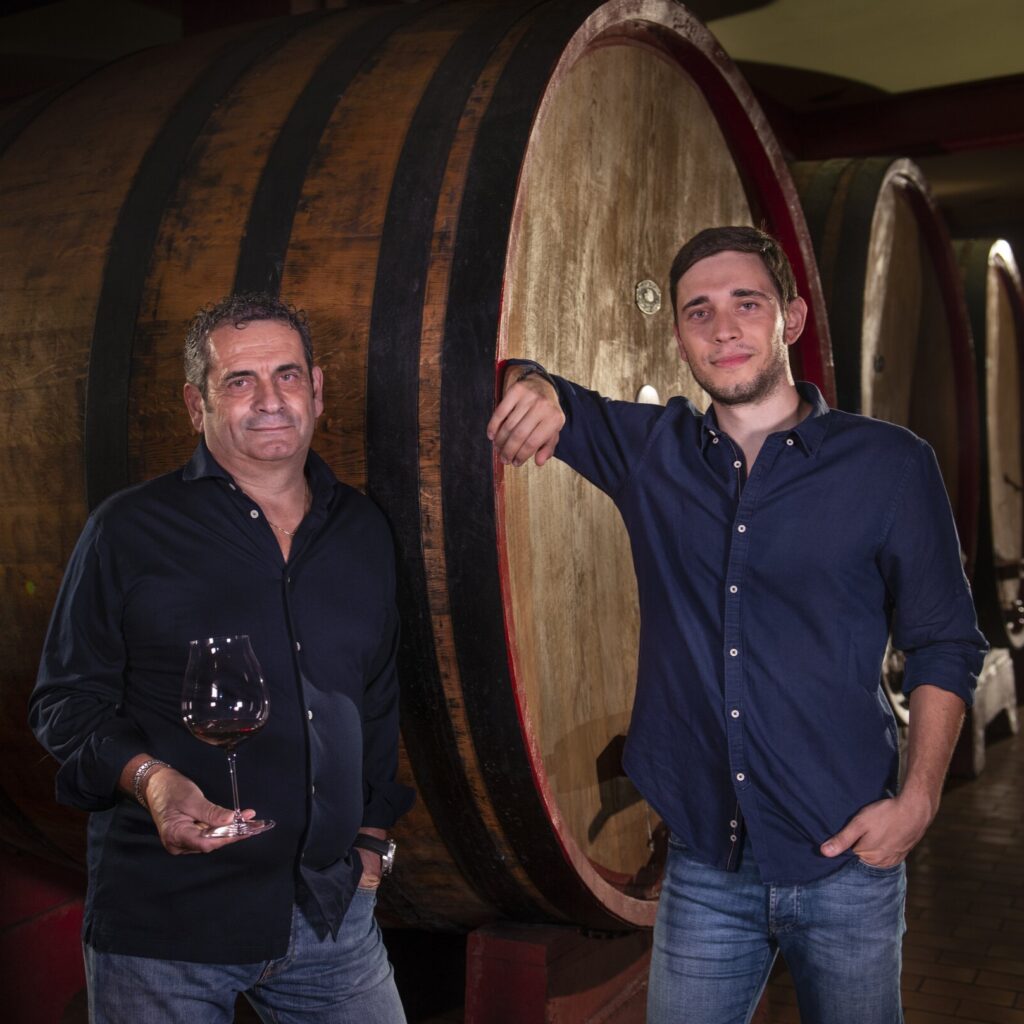
The Ziliani Family of Guido Berlucchi | Lombardia, Italy | @berlucchiwine
Berlucchi’s excellence is born of curiosity and deep friendship. In 1955, Guido Berlucchi, a successful landowner in the Franciacorta region, approached the young enologist and consultant, Franco Ziliani, to improve his still wines. Then, Ziliani came to Berlucchi with the question: what if we were to make a sparkling wine as the French do? Berlucchi, who was eager to first improve the viability of his Pinot del Castello, offered his property and support to this pioneering experiment. After a number of unsatisfactory vintages, the two men’s partnership produced the first shining vintage of their classic method sparkling wine, the 1961 “Pinot di Franciacorta.” This was a radical departure from the still table wines traditionally produced in the area and one that would prove revelatory for the region. In 1967, Franciacorta became a recognized designation of origin for Italian wine, with Berlucchi leading the way.
The name Berlucchi is now synonymous with Franciacorta and their wines are a staple of Italian celebrations. Franco Ziliani, lovingly referred to as “the father of Franciacorta,” remains president of the estate, overseeing the work of his three children, who now lead all communications, production, and sales and marketing. Cristina, Arturo, and Paolo are forging a new vision for Berlucchi into the 21st century. They pioneered the Berlucchi ’61 and Palazzo Lana Riserva lines as homage to their father and the founding distinction of Franciacorta and have pushed for higher standards of environmental sustainability in all vineyard and winery practices.
Berlucchi is a unique player in the field of sparkling wine--they capture both the luxury and glamour of this classically romantic beverage while maintaining an intrinsic curiosity and hunger for innovation. Unencumbered by generations of expectation and tradition, Berlucchi succeeded at crafting an elevated sparkling wine, tailored to Italian standards of excellence. They will undoubtedly continue to brighten the pallets and parties of bubbly lovers well beyond the region of Franciacorta.
Valter Musso | Langhe, Italy | @mussobarbaresco
The village of Barbaresco in the Langhe region is the home of Azienda Agricola Musso with it’s vineyards and winery.
This small village was founded many years ago, thanks to the work of an historical family of the place, particularly tied to the life of the countryside since 1698, when the mayor was Giacomo Filippo Musso, followed, seventy years later by one of his descendants, Giuseppe Musso.
In this village dedicated to wine, the Musso winery has developed its own history, whose features are often coincided with broader events that have marked the path of the entire society .
The Musso winery was founded in 1929 and coincides with one of the most critical moments of the Italian economy and the world, the year of the “Great Depression”, that brought down myths and structures that seemed invincible. In those years it was difficult just to manage everyday life and to pool resources for survival.
Yet, Sebastiano Musso, born in 1906, did not lose heart. Even with being left alone at a young age from the untimely death of his father, he found the strength to fight back and establish a small winery in Barbaresco .
He didn’t have a lot of ground, only “3 giornata piemontese” (a little more than one hectare, 2.62 giornata equal 1 hectare) one in the locality of Cavanna and one on the hillside of Ronchi . It was small, but enough to start . While he continued the work of the family, cultivating the vineyards, he started producing his own wine.
The following years were very difficult, those of World War II and after the war. Yet he managed to survive making wine and selling it, overcoming the difficulties and distances. Year after year , the markets were enlarged. In the early sixties he understood that it would take more grapes and help in the vineyards and winery to cultivate and produce. The light of progress began to show it’s reflections in the distance.
It was in the sixties that his son Augusto, who left some time before to Turin to seek a life in the city in the mechanical sector, thought of his decision and he knew it was time to return home. He didn’t miss the city lights and knew there was a family and a winery waiting for him in Barbaresco. His future was there to look after and follow the family business.
It was the beginning of 1968, the era of big bets in agriculture, especially in viticulture and oenology: Italy had passed its wine law of origin only a few years ago and this would give more
certainty to those who produced and those who consumed, enhancing the quality of the wines.
It was in 1966 that Barbaresco, the wine to which his father Sebastiano had dedicated his life, had become a DOC wine and this recognition had created great interest for the wine.
With his return to the winery, Augusto brought the enthusiasm of youth. The winery benefited and in the following years, Sebastian and Augusto expanded their vineyards with the purchase of a plot on the hill of Pora and an entire farm in Rio Sordo.
Today, the stars are still the men and their generations . They do not contradict each other, but are in total synergy, highlighting the best capabilities of each.
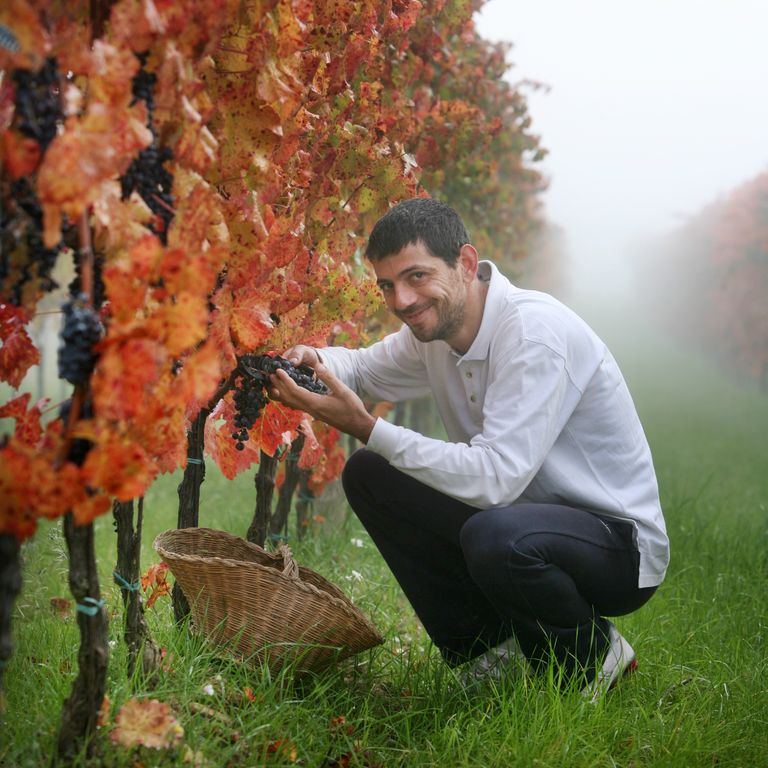
First is Valter Musso, a young winemaker who joined the family winery in the mid-eighties, today is a mature man and head of the winery, overseeing the responsibilities in the vineyard and the winery to produce quality wine.
But he is not alone, there is also the next generation, his son Emanuele, who supports him with marketing the wine and his grandson, Luca Accornero, who takes care of the work in the vineyards.
At the entrance of Barbaresco, Via Domitius Cavazza 5, is still the home of the Musso Winery. Here is the cellar where the grapes are vinified, aged and when ready put in the bottle for final aging. Again here, the bottle assumes the final look, the elegant label that will accompany the wine its the way to the market .
Each step is performed in a dedicated environment, using the most appropriate containers to give the best quality to each wine: the steel tanks for vinification, wooden casks of various sizes, dedicated space in the cellar the maturation of the wine and the aging in the bottle before release.
Even the vineyards, about 10 hectares in all, are mainly in the hills of Barbaresco and planted with traditional varieties (Nebbiolo, Barbera, Dolcetto and Freisa) along with the universal Chardonnay. Musso‘s vineyards are located in four of the most prestigious crus of Barbaresco: Pora, Rio Sordo, Ronchi and Cavanna.
There remains another varietal, Arneis, cultivated in the Roero beyond the river Tanaro, in Santo Stefano Roero. The winery cultivates the vineyard in collaboration with a winemaker in the Roero.
The main star of the winery is the Nebbiolo grape with about 50% of their total vineyard area. The remainder is divided among five other varieties.
The results of the work in the vineyard and in the cellar are about 80,000 bottles of wine per year on average. Barbaresco makes up 40%, a grand red wine with structure and long aging. Three types of Barbaresco are produced: a blend from the union of grapes from different vineyards and two single crus: Pora and Rio Sordo.
Along with the Barbaresco there are four other reds and two whites: Langhe Nebbiolo DOC, a fragrant red wine that can be drunk younger.
Then, Barbera d’ Alba DOC, Dolcetto d’Alba DOC and Langhe Freisa DOC. Finally, the two white wines, Langhe Chardonnay DOC and Roero Arneis DOCG.
It’s been more than eighty years since 1929 when Sebastiano Musso decided to dedicate his life to this winery. It was not in vain. Today, the winery is solid, the vineyards space has increased in size, the winery is equipped and efficient along with a dynamic and international market and an image of quality and prestige
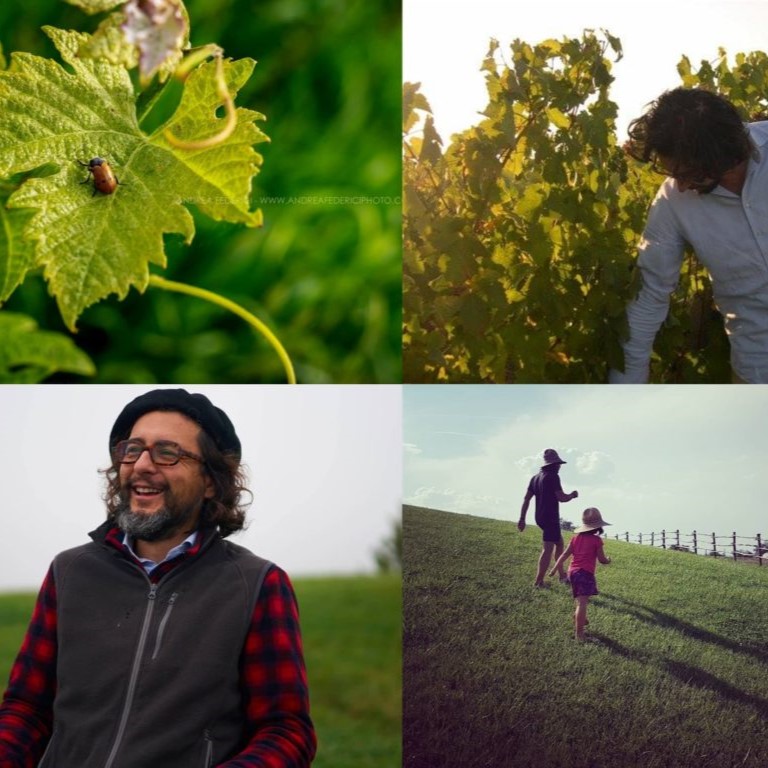
Stefano Amerighi | Cortona, Italy | @amerighistefano
There is exceptional Syrah being made today in southeastern Tuscany in the appellation of Cortona, specifically from the hands of Stefano Amerighi, the young and dynamic owner of the eponymous estate. Stefano, who comes from a farming family, was born and bred in this area. He's Tuscan, through and through--actually, he'll tell you, he's so original that he's Etruscan!
Cortona is one of only a few places in Italy that could consider Syrah both indigenous and a focus. Why Syrah? After the fall of the Medici, Tuscany passed to the Hapsburg-Lorraine dynasty and shortly thereafter to Napoleonic occupation. These political shifts brought major changes to many aspects of daily life, including within agriculture, where new ways of worklng the land were established and new cultivars were introduced. Syrah has a presence in Cortona dating back to the late 1700s. The noted ampelographer Attilio Scienza began a nearly 30-year study of the Cortona zone starting in the late 1970s. He found the terroir remarkably similar to the Rhone Valley, both in terms of climate and geology. Syrah was already here; it made sense that it would be the benchmark for any forthcoming wine appellation. Using Professor Scienza's findings, Cortona was granted DOC status in 1999.
After an in-depth geological investigation beginning in 2001, Stefano identified eight hectares of land well-suited to his project: southeast exposure, a mix of silty clay sedimentary soil, and a base of thriving microorganisms. Stefano's cru is in Poggiobello di Farneta, in the Chiuso di Cortona, the last hills descending down from the town. This is an area that was not a seabed during the Pliocene, unlike much of its surroundings. Interestingly, it's a goldmine not just for winemakers but also for paleontologists, as dinosaur fossils abound on this little "island."
Next came the sourcing of the materia prima: his selections of Syrah came from some famous estates of the southern and northern Rhone, as well as some Italian Syrah clones. Since the beginning, Stefano has adhered to the principles espoused by Rudolf Steiner and Masanobu Fukuoka. He views the farm as a complex holistic system. As such he employees six people year-round to follow the cycles of nature. He has fruit trees (200 different heirloom varieties), various grains, olives, Chianina cattle, pigs, geese, and hens. He is maniacal about low-impact farming. Stefano says, "if it’s wet we don’t use the tractor, but rather a backpack pump sprayer—two or three treatments a year are done completely manually like this, like one hundred years ago. Usually, we work the rows in an alternating fashion—one ‘on’ and one ‘off.’ In the ‘off ’ rows, we don’t work them or even step on them for a year, not even for treatments. When I started this project in 2001, a few people considered me a visionary, but most thought of me as a bischero." (KR: Tuscan dialect. Literally 'tuning fork,' but colloquially 'a fool'). Things change. Today, Stefano is the president of the consorzio of Cortona.
Starting in 2013, Stefano began his Pecorino project, Noe', retracing the grape to its genetic origins in the Monti Sibillini of Le Marche, at 900-1000m above sea level, working with 100+-yr-old ungrafted vines. More recently Stefano bought some land in San Pietro a Dame in the area known as the Monti di Cortona. He planted Syrah there on terraces above 700m. Those vineyards saw their first harvest in 2021 and we'll see a young-vine, fresh Syrah emerge at some point in 2022. He's also one of six winemakers collaborating at Halara' in Marsala, a one hectare vineyard planted to Parpato and Catarratto. He's quite linked to some of the famous names of the Northern Rhone and he's currently writing a monograph on Cornas. Stefano is an ever-searching vignaiolo. There will also be more to learn and more to say about what he's up to.
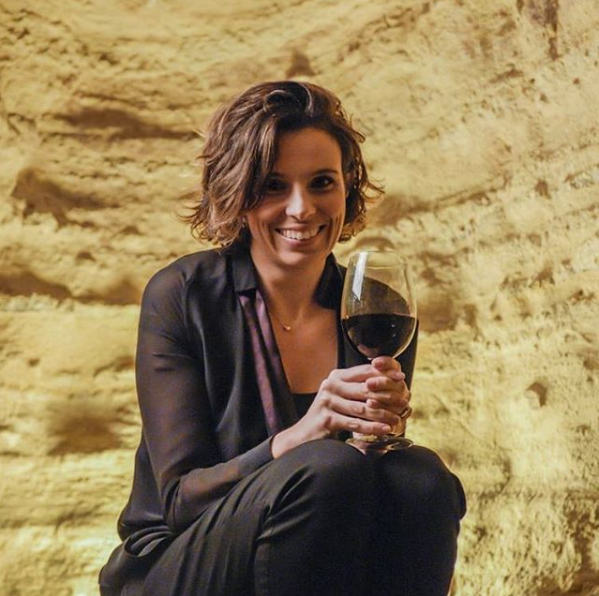
Chiara Ciavolich | Abruzzo, Italy | @ciavolich.vini
The Ciavolich family is an old family of wool merchants of Bulgarian origins who, to escape the advance of the Saracen invasion, took refuge in Italy in the town of Miglianico, in the province of Chieti around 1560.
The transition to land owners happened during the XVIII century. In 1853 Francesco Ciavolich built in Miglianico, opposite his private residence, the first winery, nowadays one of the most ancient and suggestive in Abruzzo, where to work independently grapes that came from the surrounding lands. At the end of the XIX century an important marriage marked the future path of the winery on Loreto Aprutino’s side: the one between Giuseppe Ciavolich and the noblewoman Ernesta Vicini from Loreto Aprutino. Donna Ernesta gave life in her private building in Chieti to one of the most active literary salon of the early century receiving among others her friends Costantino Bardella and Francesco Paolo Michetti.
Her son Giustino was a cavalry officer during World War I and on returning during his retirement, he took care of the family’s properties passing down to his son Giuseppe Ciavolich the love for the land and a burning desire to hand down the estate. In autumn 1943 just after harvest, the German troops while retreating placed their general headquarters on the higher floors of the private residence in Miglianico allowing the family to stay in the underground winery. On 8th December of that same year the SS forced their evacuation. That was the last harvest to be produced in the ancient underground winery.
In the 1960s from the inheritance division of Donna Ernestina, the family received the estate of Loreto Aprutino, in the province of Pescara, of circa 50 hectares. Here Giuseppe Ciavolich planted Montepulciano, Trebbiano and Cococciola varieties.
Nowadays Chiara continues cultivating to pass on an ancient history throughout wine, a red thread connecting past, present and future.
Giampoalo Tabarrini | Montefalco, Umbria, Italy | @tabarrinimontefalco
Tabarrini is one of the most popular artisans in the Montefalco area, with vineyards and a cellar in the Turrita area. Giampaolo, who represents the fourth generation of farmers in the family, is an enthusiastic and full of energy winemaker, creator and creator of an uncompromising project that has grown over time. Dreamer, visionary, capable of evolving while remaining himself, he took over his parents' farm in the late nineties and transformed it into an extraordinary success story. The company that bears his name resembles him and appears like a cog in perpetual motion, in a continuous search for perfection and new challenges. A dynamism and a projection towards the future that rest on an equally strong roots: in their own land, in the traditions of the place and in the values that the Tabarrini family handed down from generation to generation.
The Fantinel Family | Venezia-Giulia, Italy | @laroncaia
La Roncaia was founded in 1998 when the Fantinel family acquired the winery, located in Friuli Colli Orientali, to create a boutique winery able to produce top-quality wines. The philosophy of La Roncaia is to express the uniqueness of Colli Orientali del Friuli terroir, always aiming for the best. The passionate team is guided by the young and talented winemaker, Gabriele Tami, who has received numerous awards and acknowledgements, including the title “Wine Master.” This title was given when La Roncaia was named as one of the top 100 wineries in the world by The Drinks Business in 2020.
La Roncaia vineyards are highly selected hectares nurtured by a passionate and loving team who cherish this “crown jewel” of the Fantinel family.

Harvest Club $180/month
We offer four monthly wine club subscriptions covering a range of interests and budgets. Our offerings include high quality, hand-selected wines at each level, including the option to customize. Perks include huge savings with each selection and 10% off anytime you shop. Not a members? Join today.