
From the Columbia Gorge to Paso Robles! (Harvest Club September 2022)

Harvest Club Wines:
For most wineries, September is harvest time. The actual harvest date depends on the rain cycle and the temperature. Winemakers will go out daily to check the BRIX, or sugar content, of the grapes. A rain around harvest time can literally dilute the grape flavor, as the water from the rain soaks into each grape.
Featured Wines:
This high-acid, savory, baby Ramato stays on the skins for 6 days. This wine is generous in character with notes of herbs, grapefruit, and black tea.
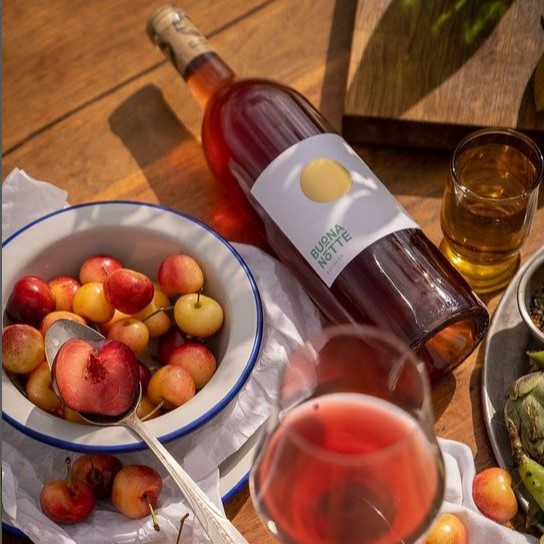
"Rosalba skin-contact Pinot Grigio is perfect for your picnic or outdoor dinner." (Winery)
"This new skin-contact Chardonnay comes from the same Hillside Vineyard in The Dalles as the Merlot. We had to hand-destem two tones this year to avoid smoke from the stems and leaves. It also gave it the silky texture of my favorite Italian dessert, Panna Cotta. Left on the skins for an average of two weeks the wine is savory and complex, this is an orange wine that everyone can love." (Winery)
"This Pinot Noir is a stunning example of high altitude Pinot from Underwood on the Washington side of the Gorge. Acadia Vineyard is an 80-acre property, farmed organically, and moving towards biodynamic practices under the new ownership of Jason Mann and team. Underwood fruit is always compelling but really thrives in hot years. The grapes maintain acidity and show off incredible vulcanic terroir, power, and the wine's light red fruits help hit every note." (Winery)
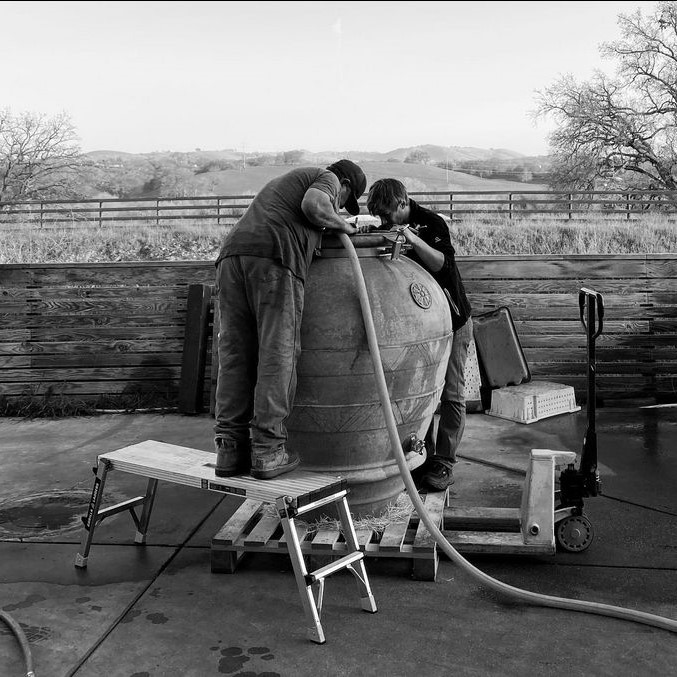
This bottling was a total bright spot in the 2020 Fatto a Mano Series and improved on what has been our most popular orange wine. Falanghina grapes are left on the skins to ferment for 90 days in amphora. After fermentation the grapes are drained and pressed. The wine is then transfered back to amphora to age for 4 months until bottling.The wine is not only orange in color, but also smells like orange blossom and creamsicle. There is also an exoctic Chai element present. The palate is structured more like a red wine with notes of pear, orange sherbet and chalk. 75 cases produced." (Winery)
"Aromas of honey, spring flowers, wet stone, and golden delicious apples. Slight wheatgrass, matcha and honeydew melon. Texturally it is full and silky with heightened acidity. The palate is a balance between honey-like sweetness and tart green apple with a gravelly minerality underneath." (Winery)
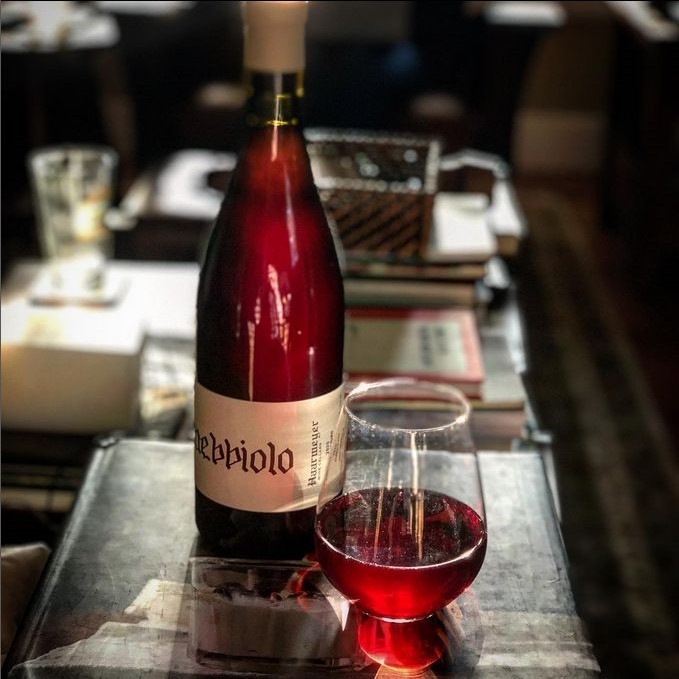
"The Heringer family has a long history of farming in Clarksburg and has begun setting the example for organic farming in the region. The Nebbiolo we make from their vineyard is one of the lightest and most varietally correct you will find in California. That being said, the five rows of Nebbiolo they have planted is quite different from what we see in Italy. The soils are much richer here in the delta, the weather is much warmer and the vines are pruned in a completely opposite way than what is the tradition in Italy.
It’s trained on a quadrilateral cordon system and cropped at five tons to the acre. The traditional method is cane pruning and one is likely to see much lower yields. As with all of the fruit we work with, we make picking decisions based on pH, flavors, the color of the seeds, and separation of pulp and Brix. In that order. We picked this vineyard in ’18 and ’19 at the same pH: 3.2 with brown seeds. In ’18 Brix was 23; in ’19 Brix was 22. If we had waited longer, as most do in this situation, we may have achieved darker color but clearly the alcohol would have been very high and we would have missed out on all of the great natural acidity and perhaps the tannin, too. This is why we stress picking early so much." (Winery)

About the Producers:
Graham Markel | Cascade Locks, Oregon | @buonanottewines
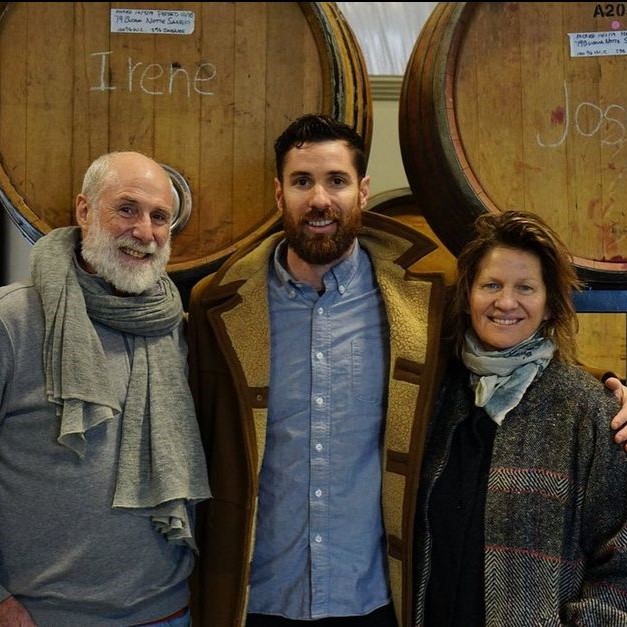
"Buona Notte is very much a family endeavor. The team consists of my father and business partner, Jeff Markel, and my mother, Peggy Markel, as our culinary insperation. Last but not least, there’s myself, Winemaker, Graham Markel.
This project is the fruit of a life full of travel and exploration by the Markel Family. I was lucky enough to explore the world with my mother, father, and sister from an early age. At five I was eating kangaroo in Australia's McLaren Vale, and at ten I was already drinking Campari and soda in the Florentine Palazzo’s. (What?.. we didn’t realize it had alcohol).
From an early age I learned how to cook at my mother's Tuscan culinary school from some of the best chefs in Italy. At 21 I got my first cooking job at The Kitchen back in my hometown of Boulder, Colorado. I moved over to bartending after a year and began learning about wine and cocktails. This is where the idea of crafting my own beverages was sparked.
I graduated from Naropa University's Jack Kerouac School of Disembodied Poetics and got a job at Antica Terra Winery in Oregon’s Willamette Valley. For seven years I worked under Antica Terra’s Maggie Harrison and Hiyu Wine Farm’s Master Sommelier, Nate Ready. I learned many things from those two, but the number one thing I learned was to think deeply about winemaking and how to add beauty to every step of the process. No matter how arduous or tiring, every action must be taken to make the best wine possible.
Living at Hiyu Wine Farm in Hood River opened my eyes to the many winemaking possibilities that there were on offer in the Gorge. There are so many microclimates creating different opportunities to explore fun, exciting varieties. Gewurztraminer from the bluffs on Underwood, Mencia from Mosier, and of course the Sangiovese from east of The Dalles resonated the most.
Many people say that if you squint hard enough, the rolling hills of The Dalles look somewhat like the hills of Chianti. It reminded me of some wild hybrid of the American West and Tuscany; two places near and dear to my heart. The opportunity was too excellent to pass up. It was time for me to make my wine.
Here in the snow-capped volcanoes, rolling hills, and big rivers of the Pacific Northwest, we have found gastronomic poetry. Oregon has a deep food and wine tradition, driven by the unique culinary culture of Portland and the world famous wines of the Willamette Valley. It’s the Buona Notte mission to add to that lineage.
I still love to cook, and I'm always looking to push the boundaries of creativity in the world of food and wine. It's been my pleasure to capture this time and place in the best bottle of wine I can make.
The Buona Notte team hopes our wines bring you as much joy as the journey to creating them has brought us."
Brian and Stephanie Terrizzi | Paso Robles, California | @giornatawines
Stephanie Terrizzi’s interest in wine was sparked more than fifteen years ago while working at a wine bar in Illinois. Her desire to get closer to the action led her to Sonoma County where she was inspired by some of Sonoma’s best wine professionals while managing and building the wine programs for Ca’Bianca and Sassafras restaurants. Stephanie's interest in science and her pre-med background led to more formalized wine training, leading to a Certificate in Viticulture from the Santa Rosa Junior College while performing vineyard duties in Napa and Sonoma. Next, on to Fresno to pursue a degree in Enology, Chemistry and Plant Science from Fresno State where she gained winemaking experience while also experimenting with Cabernet Sauvignon in her own backyard project. She is currently managing the small west-side Paso Robles vineyard Luna Matta and is doing vineyard consulting for one of the country's top young female winemakers. Stephanie recently planted Giornata's estate vineyard and is also an owner and viticulturalist for Broadside.
Brian's love for Italian wine started many years ago and stems from his lifelong love of Italian food and fascination with his Italian heritage. After working for respected Zinfandel producer Rosenblum Cellars, he traveled to Italy to work with the famous Paolo DeMarchi at Isole e Olena in Tuscany. Brian's experience at the Tuscany winery provided him a great deal of insight into Italian winemaking, in addition to a month traveling and visiting other cellars from Tuscany to Sicily. During this trip he also reconnected with distant relatives in a small village in Sicily, the hometown of his ancestors famous for wine since the dawn of the Roman Empire. Brian's wine making pilgrimage has not endured without some doubt and skepticism. Several years ago, he almost abandoned his dream when one of California’s most famous winemakers told him: “If you want to make nebbiolo move to Italy. You’ll never do it here.” A couple of months later a meeting with Steve Clifton of Palmina winery refreshed his momentum. Steve convinced Brian to keep working toward his dream and shared stories of his own success. In 2005 while studying enology at Fresno State he married Stephanie, the love of his life, and a true vineyard guru. Her enthusiasm toward Italian wine was as powerful as his and they spent their honeymoon visiting the top producers at their estates in Italy. Brian also spent harvests working with Chris King at Red Car and Mike Sinor of Sinor-Lavallee. In addition to handling winemaking duties for Giornata, Brian is also the founder, owner and winemaker for Broadside.
Craig Haarmeyer | Clarksburg, California | @haarmeyerwinecellars
Haarmeyer Wine Cellars is a family team - Craig, Alex, Kelly, and Marian Haarmeyer. Started in 2008 with fruit from a vineyard near the town of Galt, CA, Craig was interested primarily in making wines using Spanish and Portuguese varieties, mainly because of the dry climate and the proximity of this vineyard to his home and winery in Sacramento, CA. He felt the place seemed right for the numerous varieties of sun loving, hardy grapes planted there. This led him to consider other sites and he noticed how the wines could define and express the terroir of the region. Soon he began using the phrase "Sacramento terroir" to describe his early efforts.

Harvest Club $180/month
We offer four monthly wine club subscriptions covering a range of interests and budgets. Our offerings include high quality, hand-selected wines at each level, including the option to customize. Perks include huge savings with each selection and 10% off anytime you shop. Not a members? Join today.